
Habitat & Conservation
|
06/03/2026
PODCAST EP. 367: Arizona Quail Initiative is Shaping Future of Habitat, Access, Hunting
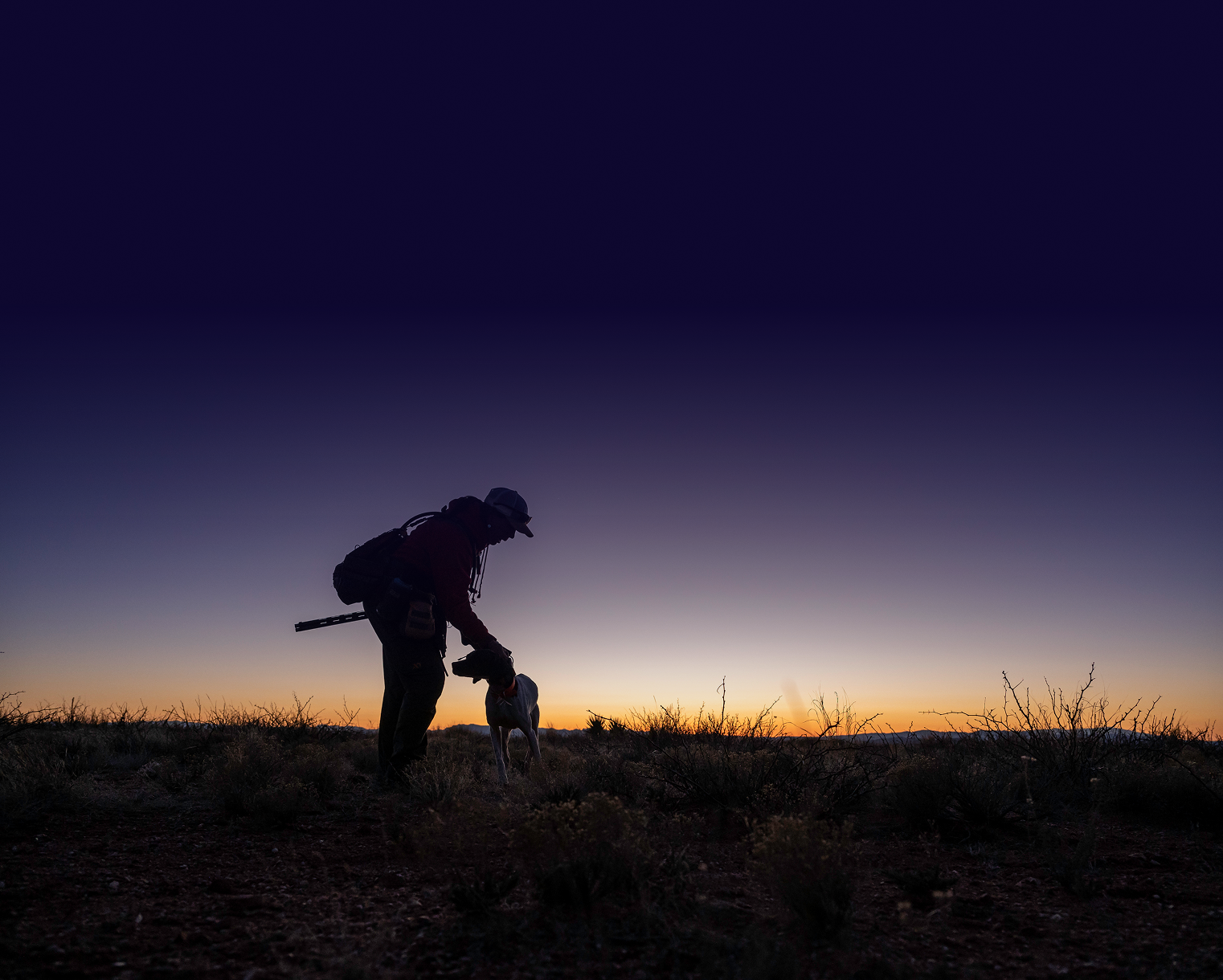
Monsoon rains, desert grasslands, and wild coveys collide in Arizona's ambitious quail restoration effort.
Related Podcasts


Listen & Subscribe:
"On the Wing Podcast" is proudly fueled by Purina Pro Plan.
Episode Description
Monsoon rains, desert grasslands, and wild coveys collide in Arizona's ambitious quail restoration effort.
Arizona's quail country is bigger, rougher, and more alive than most hunters realize. In this conversation, the crew behind Quail Forever's Arizona Quail Initiative breaks down how large-scale habitat restoration is shaping the future of Gambel's quail, scaled quail, and Mearns' quail.
From remote desert grasslands to oak-covered "sky islands," this episode digs into the real work happening behind the scenes to improve upland bird habitat on both public lands and working ranches. The discussion covers woody encroachment and removal, water catchment projects, grazing management, and how conservation partnerships are putting millions of dollars directly onto the landscape for quail habitat restoration.
You'll hear how Arizona's monsoon cycles influence quail populations, why Mearns' quail depend so heavily on summer rains, and how habitat projects can quickly improve bird numbers when conditions align. For hunters dreaming about desert quail hunting, big running bird dogs, and wild country few people ever experience, this conversation paints a vivid picture of why Arizona remains one of the most unique quail hunting landscapes in North America.
Follow the show for more weekly hunting, conservation, bird dog, and upland bird conversations.
Show Notes
Learn more about QF's Arizona Quail Initiative and QF's RCPP project with USDA's Natural Resources Conservation Service, Arizona Association of Conservation Districts, Arizona Game & Fish Department, and the Arizona Department of Forestry and Fire Management.
Check out Bob St.Pierre and Wade Zarlingo's hunt for quail in Arizona's backcountry utilizing llamas to haul in camping gear at www.QuailForever.org/llama.
View Transcript
Transcript for On The Wing Podcast Ep. 367: Arizona Quail Initiative is Shaping Future of Habitat, Access, Hunting
Speaker 1 (00:50.654)
Welcome to On the Wing Podcast presented by Purina Pro Plan. Quail Forever's Arizona Quail Initiative is underway in the American Southwest, and we're making key strides to improve quail habitat across the state. A big boost to that effort is what's known as the RCPP AFA. And yes, let I will tell you what that means. Regional Conservation Partnership Program. AFA, help me out, Wade. What's AFA mean?
Speaker 2 (01:31.86)
AFA is an alternative funding arrangement.
Speaker 1 (01:36.478)
Alternative funding arrangement.
Speaker 1 (01:43.79)
So there you go. It might be my new favorite acronym, RCPP-AFA. I would like to buy a vowel, Pat. with so the RCPP AFA is helping Quail Forever accomplish our goals for a variety of quail species in the state of Arizona. So today I'm joined by three of my co-workers. Two of them
in Arizona and Casey Seal coming at you from Wisconsin as my co-host for this episode. And and I I mentioned Wade already. Wade makes his return to the podcast. It's been a number of years, but listener hardcore listeners know the name Wade Zarlingo. He's my llama buddy from another mother.
I don't know that I've ever said that or anybody's ever said that.
Speaker 2 (02:43.306)
It didn't sound quite right.
Speaker 1 (02:48.684)
Wade Zarlingo, if you'll remember, worked for the Arizona Game of Fish Department when we did a film back in the day where we k well, we didn't ride llamas. We llamas carried our camping gear and hunting gear into the Arizona backcountry and we set up base camp a couple miles in and then we went quail hunting.
Murns quail hunting. Arizona, they're known as Mern's quail. Other states, they're known as Montezuma quail. But it's been a long time since we talked. Wade now is a coworker, works for quail forever. So we'll start the introductions with Wade. It is good to see you again, Wade. Welcome to the Habitat Organization as a coworker.
Speaker 2 (03:40.642)
Thank you. Yeah, it's been a it's been a fun ride getting here. So I've I I've loved every minute of it so far. And we're gonna get some tangible projects on the ground that can improve habitat for quail species specifically, but other other wildlife as well. So I'm excited about it.
Speaker 1 (03:57.554)
all right, so we'll a bounce to Scott Papenberger, who is also joining us from Arizona. He's the Quail Forever Southwest State Coordinator. So tell us a little bit about the region you cover, Scott.
Speaker 3 (04:15.18)
Yeah, thanks, Bob. I hope you can hear me okay. I know we're struggling a little bit with with the internet, but yep. So I'm responsible for our programs and help our folks out in Arizona and New Mexico as is my territory as a state coordinator and have the amazing pleasure to work with Wade again. It's just been fantastic as we kind of launched this NRCS partnership that we're working on here.
In Arizona with the RCPP. It's just been incredible. And I and our wanna acknowledge our other partners with this too that that we would be weakened tremendously without. And that's the Arizona Game and Fish Department, the Arizona Association of Conservation Districts, and the Arizona Department of Fire and Forestry Management. So they're our primary partners in this in this collaborative effort to put
a a pretty significant chunk of of money on the ground and a lot of acres of restoration. Yeah, Wade, help me out here a little bit.
Speaker 2 (05:21.174)
No, I think you're right on. I just w didn't I didn't I wanted to make sure we didn't miss the producers as a partner. You know the ranchers, the ranchers on the land and the the public agencies that are kind of helping all this stuff roll, right? So and the producers are a big part of this.
Speaker 3 (05:28.226)
Yes, thank
Speaker 3 (05:39.585)
Right, right.
Speaker 1 (05:40.974)
We will dive into the mechanics here in a moment of you know how the agencies and quail forever and the landowners work together. Let's finish off introductions here real quickly. Welcome back a long ways from Arizona. Casey Sill is gonna be co-hosting the episode with me. Casey, you've been working closely with these guys on at the communications front. tell
Tell me what excites you about this particular portion of your job and working on the Arizona Quail Initiative.
Speaker 4 (06:16.716)
Yeah, so Scott and Wade and I have been working together for I don't know, a little a little over a year probably on on some of the the calm side of of this initiative. But selfishly for me, just personally, what excites me is I am and I've mentioned this on the podcast before, but I know nothing about the Southwest. I'm I'm an absolute noob as far as quail hunting in the Southwest goes. So it's been interesting to learn sort of how some of the you know
the habitat projects and what we're doing in Arizona works down there. and yeah, I was super excited to really get into the nuts and bolts of this thing and and talk about what what we've got going on in Arizona right now. And then also just as importantly as what we've got coming up in Arizona, you know, sort of what's on the horizon.
Speaker 1 (07:02.764)
Right on. All right. So we are gonna we are gonna dive into that, talk about the birds in Arizona that we're trying to influence with this project, how landowners are participating, how we're working with agencies, and what the outcomes are. before we get rolling, I once again want to thank our presenting podcast sponsor, Purina Pro Plan. Not only the sponsor of On the Wing Podcast, but the national dog food.
sponsor of Pheasants Forever and Quail Forever. When I wrote when I rode those llamas, when those llamas took me into the backcountry, they were carrying Purina Pro Plan on their on their satchels. Was that what's the right term, Wade? It's not satchel. Paniers, that's right. Paniers. We had Purina Pro Plan in those panniers so our dogs could eat well when we were eating those
Speaker 2 (07:45.922)
Paniards.
Speaker 1 (07:57.774)
Pecan finished T-bone steaks. I gotta ask you about those steaks too, because I dream about them on occasion. but but my pups, they haven't eaten pecan-infused T-bones. They eat Purina Pro Plan, not just because Purina supports the wildlife habitat mission of our organization, but because Purina has a team of the world's best scientists and nutritionists behind their dog food. You can learn more.
at proplansport.com. Pro Plan was created for the working bird dog like yours and like mine. All right. I think I've been s I'm saying it wrong too, isn't it? Pecan. What did you say? Pecan in the
Speaker 2 (08:43.95)
I say pecans here. people that say pecans, we charge them more.
Speaker 1 (08:51.764)
So So in Arizona, pecan orchards, pecan orchards are are I mean that they're pretty popular thing on the landscape, aren't they?
Speaker 2 (09:04.28)
They're becoming more popular. Yeah. They've got a bunch of down in southeastern Arizona. Big orchards that are going in and the area around Sayurita has been producing pecans for quite a few years. So yeah, it's it's an up and coming agricultural crop here in Arizona for sure.
Speaker 1 (09:20.846)
So so the T bones you brought in that we threw on the grill, those cows were finished on pecans, or am I misre am I misremembering that?
Speaker 2 (09:32.992)
No, they were they were finished on pecans, like shells, kind of the leftovers, and then apples that were falling off the trees. So it was a pretty good mix. They turned up real nice.
Speaker 1 (09:45.39)
Real nice is an understatement. I I mean I I have I wake up and I'm salivating thinking about those those those stakes.
Speaker 2 (09:54.347)
food always tastes better in the backcountry. Well there it is that
Speaker 1 (09:58.434)
There is that.
Speaker 4 (09:59.32)
From Pheasants Forever and Quail Forever National Headquarters in St. Paul, Minnesota, this is Casey Sill with the Upland Newsroom, delivering top stories from the Habitat Organization and across the American Uplands. Last week, the Department of the Interior announced the proposed expansion of 1,450 new hunting and fishing opportunities on U.S. Fish and Wildlife Service lands across 111 stations in 32 states. This represents the largest expansion of hunting and fishing access in the history of the U.S. Fish and Wildlife Service.
And the announcement follows Secretary Doug Bergum's order directing the department to remove barriers to hunting access, designating DOI managed lands as open unless closed. The proposal would open opportunities for hunting and fishing at multiple National Wildlife Refuge System lands and fish hatcheries across the country. Federal regulations on these lands would also be updated or removed to reduce complexity. Arrol Wiegard, Pheasants Forever and Quail River's Vice President of Government Affairs, thanked Secretary Bergham for this effort.
And said the announcement represents bold action to expand hunting access to our nation's public lands for hunting and fishing. We're fast approaching peak hatch across the Pheasant Range, and as we get into June, chicks will be hitting the ground all across the Midwest, while hens recover from the taxing job of hatching a brood. Hens will lose up to 75% of their body fat and 10% of their body weight over the course of egg laying and incubation, making them particularly susceptible to disease and predation right now. Chicks are even more fragile.
Newly hatched pheasants weigh roughly two-thirds of an ounce and need to reach 11 days old before then they can regulate their own body temperature. During this critical time, chicks are extremely susceptible to cold and rainy weather. So let's all keep our fingers crossed for some warm, dry weather across the Pheasant Range these next few weeks. Outdoor life has been on a roll lately. A couple weeks back, I relayed the story of Juice, the bullfrog retrieving Labrador, and I've got another one for you this week.
They recently re ran a story that originally appeared in the August 1938 edition of the magazine about a Nebraska farm boy who escaped a German labor camp during World War I. After fleeing from a POW mining camp near Essen, Germany, J. Gilroy and a British compatriot fled cross country toward Allied lines. Over the course of their journey, they hunted with a makeshift slingshot Gilroy made, surviving on rabbits and pheasants. Anyway, it's a great story of adventure and survival.
Speaker 4 (12:20.704)
All made possible by our friend the Rooster Pheasant. Head on over to outdoorlife dot com to read the full version. That'll do it this week reporting from PFNQF headquarters in St. Paul, Minnesota. I'm Casey Sill.
Speaker 1 (12:32.976)
all right, let's let's start. Casey, let's start with the birds. Let's let's start with what we're trying to accomplish. I'll let you kind of lead this portion of the conversation with the guys. go ahead and take it away as we start the Arizona Quail Initiative.
Speaker 4 (12:51.234)
Yeah, absolutely. So I I'd like to actually start at sort of like the first grade level here. And for anybody who may not know, Scott, run us through Arizona's three quail species. What are they? And what's, you know, tell tell us about the habitat that they that they live on.
Speaker 3 (13:09.334)
You you bet, you know. So the three the three species, three primary species that we have, and you could argue there's a couple more sprinkled in there in very limited numbers and distribution also. But number one, the kind of the the the king of the quail in this state is arguably, I guess, is the gambles quail. And just you know, generally super abundant, super broad distribution, almost you know corner to corner.
North to south, east to west. unl unless it's super high elevation, you're gonna find gambles quail. really iconic, adaptable species to all kinds of habitat types. And that's that's the main bird people are are chasing when they when they go quail hunting in this state, you know. And just lots of them all over the place. You can find them almost everywhere, you know, from downtown Phoenix to the the craziest mountain range you wanna you wanna try to climb, you know.
and then next we have we have scaled quail here. and we have scaled quail in pretty good numbers and pretty good di distribution in the southeast part of the state. but it does just kind of clip the the western you know extension of their range. So so we we've got scaled quail huntable for sure, and then kind of the the the lowest numbers, most specialized species and
Folks would argue that this is the the king of the the quail species is of course Mern's quail. We call them Mern's quail here. like Bob pointed out earlier, same species as as people call monozuma quail elsewhere, but a really unique, really unique bird and and and again highly specialized, synchronized to monsoonal precipitation, very interesting feeding adaptations and specializations and
that's saying nothing about how just almost artificially beautiful they look with their their plumage and and their appearance and are certainly a a a bird hunter, bird dog enthusiast, delight, I guess, you know, in the way that they hold and and how they how they respond to to bird dogs and things like that. Pretty, pretty neat to
Speaker 3 (15:35.64)
to have those available here in the state to to pursue. So yep, those those are the critters that we're talking about. And yeah, pretty neat to be able to to do some good quality habitat work to to to help im improve it for those for those guys out there.
Speaker 4 (15:54.968)
So let's dive into the initiative then. the Qu Arizona Quail Initiative has been active for some time now. and so at a at a really basic level, describe to me what is the Arizona Quail Initiative and how is it what is it doing for each of these three species of quail?
Speaker 3 (16:13.794)
Yep. Great question. so we have been active in Arizona for for quite a bit of time here, partnered up with the the agencies, doing a lot of good work on the ground. We launched it in 2024, with a with a five year timeline to achieve the goals that we set for acres of habitat restoration, acres impacted by water development, grazing management, generating
you know support for for capacity because I think a lot of people kind of take for granted that this stuff can just happen on its own and it and and it it takes money to to have people on the ground doing this thing that further our interests and we really want to emphasize that and we really need that kind of support. so this initiative concept hopefully kind of like I said generates a l some interest
in in what we're doing and how we're going about it and holds us accountable to to to getting some things done on the landscape which which we're doing and we're we're really positioned extremely well to to to be able to accomplish those things with our partnerships here so that again launched in in 2024 and we've made some some pretty pretty significant strides towards towards our our goals and objectives with with the restoration
activity and the and the the habitat work that we're doing.
Speaker 4 (17:43.768)
So talk about that s talk about some specifics there. What what are you guys doing on the ground to impact these birds?
Speaker 3 (17:50.584)
So what we're doing is is a couple things that specifically benefit quail. And over over time for a variety of reasons, landscapes have changed due to human actions. Okay. And what we're doing is trying to reverse some of those, some of those things that that that we have control over or or that we're able to affect. Biggest thing in quail specific habitat that we can do.
Is is change these grasslands, former grasslands, back into grasslands from what they've become, which in a lot of cases is heavily encroached with native and non-native in invasive species. heavy heavy brush, a couple different species of ma ke of mesquite trees, junipers encroaching out into what was formerly grassland, those kind of things. And when we can kind of reset the
successional stage of of these species, create some mosaics. we we benefit qu it has a d a direct and immediate benefit to quail. Okay. And I say immediate, you know, quail operate on a annual cycle, those kind of things, but but it it it sets that table for when Mother Nature cooperates from the point of view of a quail and we have a good wet year, they have the habitat to to take off in. And
And we have some really interesting and and I know Wade's a big fan of this and I am too, looking at historical records of things. And we have a s historical accounts in a lot of these areas that we're working in, that speak to quail abundance and and and and presence of of quail in different species that ha has have diminished over time with things like encroachment of woody species. So so those are some of the main projects that we're doing. We've got
Also a a a really neat opportunity with some habitat specialists who are doing a lot of water improvements, improvements on existing waters, helping with the construction of new water developments. and and those kind of things ha have a really direct impact on quail also. So th those are some of the the the the high points of of what we have going on.
Speaker 4 (20:11.606)
Yeah. And how are you is as you're talking about woody encroachment, what are some of the practices that you guys are using to restore the habitat? I'm thinking about it's it's funny how similar this is to eastern cedar encroachment in Nebraska and places like that, right? So what are you guys doing to to take those species off the landscape?
Speaker 3 (20:29.418)
It's absolutely identical and it's it's it's interesting. I just got out of the car driving across Nebraska, as a matter of fact, and with my daughter playing out. Look see see look at that eastern red cedar in in this past year compared to that one where they've clearly been working on it. But but to your question, right what we're doing is direct mechanical removal of these of these juniper trees and mesquite trees at lower elevations.
through a process called mastication primarily, which involves a a giant machine that grinds these trees up and and just c clears the phys physically, mechanically clears them out of areas where where where they have been encroaching. You know, so that's the primary process. And what I wanna point out with this is and and this is where we bring a lot of benefit to our partners and to this concept of of habitat restoration. Wade and I and Bob and you could probably go out this afternoon
and restore about, you know, 50 acres of habitat before supper. You know, actually doing that work is, believe it or not, not the hard part of this and and and a way to reel me back in. but what the the tremendous work in this is is is working through the administrative processes to get the clearances necessary to do this and to line up the funding for it. You know, doing the actual work is is very simple, but largely in Arizona
we're we're working on public lands. And and and there's there's quite a process to go through on the front end of these projects to make them ready and administratively ready through through the the the various clearances that are required and environmental processes to get the machines out on the ground to do it and and and that is not glamorous work it's tedious
massive amount of of of of paperwork and and and project planning that goes into these things. months and months and months of project planning that goes into actually getting a machine out on the ground. Wade, any anything you'd like to add to that. And and Wade is an absolute magician at this. He is he is a master at it and and it's it's it's a lot of work, let me tell you, before a machine ever touches a tree.
Speaker 2 (22:57.004)
No, Scott, I think you covered that better than I could have. I mean you hit it all pretty well. So it's I didn't know you were that smart, dude.
Speaker 3 (23:07.192)
Yeah.
Speaker 1 (23:08.479)
He basically just called you the master of mastication.
Speaker 3 (23:12.43)
Don't interpret
Speaker 1 (23:18.03)
I think I pronounced all those words correctly.
You know, what thing I I know w we want to transition to talk about RCPP. I'll give it back to to Casey in a moment, but as I'm thinking about these three species of birds, two of them, scalys and gambles, I'd categorize as desert quail. although I you know I've hunted down there enough to understand there is a subtle difference between where those two birds live within the desert.
And and Myrns slash Montezuma live in you know something wholly different in my eyes to the desert, you know, the the live oak sky island sort of it's you know that hill country, just a completely different so when you talk about the Arizona Quail Initiative and Woody encroachment and you know knocking back invasives, is there
a difference in what that looks like for each of those three species, or is it there's they're actually more uniform issues. You know, mesquite is mesquite and it grows everywhere in Arizona. Like help help me understand a little bit, Scott, about what what the implications are for each of those three different birds.
Speaker 3 (24:42.712)
Yeah, that's a great question. with I'd say and and and Wade, please jump in too to this, but if you're a gambles quail, y you respond to anything that we do. I mean, you put a match on something, you you you get a machine out, they're gonna be happy. You know, it's it's gonna it's gonna really help them out. One you know, one of the one of the key components of of the initiative, both as a
a broad big picture concept for for a a much longer term and and supported by the rcpp one of our one of our really primary objectives that we have that we hope to really dig into at this that will specifically help Murnsquail out do some grazing management stuff or we can help some producers with some tech new technology out there like virtual fence and this will also help gambles in some places where where we hope to
deploy those kind of things and work with willing producers. But but MERNs, especially where we can, you know, hopefully identify some some critical nesting areas, that kind of thing. Well, we know where they are. And if we can work with producers using some of this technology to preserve some nesting cover, that is going to be probably the the the biggest thing that that we can influence besides making it rain. And and that's just gonna you're gonna hear that over and over again. But
i is is kind of maintaining and retaining some of that some of that nesting cover for that particular species. And and you know, scaled quail are are an interesting kind of intermediate between the two in their habitat needs but but they respond well to this quality grassland even more so than than than than gambles so we have some very specific actually scale quail projects going on
with support from some chapters. It's just an incredible partnership. and and our our coordinating coordinating wildlife biologists down around the Tucson area to to really restore some some scaled quail specific grassland that's been encroached by not just mesquites but by by Choya cactus in particular in doing a a big landscape scale restoration project with this with mesquite and
Speaker 3 (27:07.672)
So, a cactus in particular to benefit scale quail. So I that kind of touches on on some specifics to each species. Does that does that help you out? in and kind of kind of paint the picture on the things that we do.
Speaker 1 (27:20.206)
Yeah, which it w what I'm hearing is there while some of the same whether it's woody encroachment removal, nesting cover enhancement, the goals are the same, but how what you're actually removing from each ecosystem is different enough for each bird.
Speaker 3 (27:40.767)
Or or it's a I think it's important to say, partnered up with producers to to maybe leave a little bit in in in some cases, you know. But but Wade I think Wade had had something he was gonna add it.
Speaker 2 (27:52.148)
Yeah, I think I mean the bottom line on the mastication or woody tree removal is you're doing it a little bit different for each species, right? Like gambles quail, they require some type of brush component to nest in to hang out. So you want to leave a few more trees along re you know, ephemeral streams, things like that to where they can get in and hide for roosting cover. Whereas scale quail don't need that. They're a ground nester. So you're you're treating
basically the same woody encroachment for all the species, including Myrn's quail, because once you take that sunlight off of those oak hills, you reduce your your grass cover. And that's what they mostly rely on for for hiding and then grazing's a big part of that, as Scott mentioned. It's it's but it is pretty pretty neat how both those issues are pretty much the same. You know, d but it is a different treatment method to benefit
those specific species, so
Speaker 4 (28:52.652)
Before we move on to sort of the the get into the R C P P angle on this, I did want to ask, as we're talking about these projects, something that was interesting to me is how the remoteness of Arizona's landscape sort of impacts the work that you guys are doing. I'm thinking of a a video we shared recently on our social media channels, with working on is it water catchments is that's the correct phrase. Right? Okay.
in Arizona where folks actually have to travel by helicopter sometimes to get out to these locations, which is a really cool video. If anybody hasn't seen it, they should go to our Queel Friver social media and and check it out. and it also seems like it'd be a a pretty cool job. but just talk about how does Arizona's the remoteness of their landscape create kind of challenges for some of that work.
Speaker 3 (29:41.282)
No, that's a that's a fantastic question. And here we're used to distances. We're used to remote. I mean, what what what might almost scare people to come out here sometimes is is our backyard to to Wade and I. And we, you know, we're we're just not bothered by it. And we're we're used to dealing with that. But I think where that rubber meets the road is the the cost per acre it it that that's involved to treat
things that er okay, everything's remote, but some stuff is insanely remote. And and the further a a contractor has to haul their equipment down, not joking, 90 miles of dirt one way, with zero, you know, human presence, you know, from from the pavement to to the project area, that runs runs the cost up that that we're looking at.
in in funding these projects. It and it can reduce the the acreage that we can accomplish with the same dollars that we could somewhere that's closer to town. so so those those really remote areas, that that's the thing that we fight the most is is is just just the bang for the buck on on on the funding that that that we're putting on the ground.
Speaker 4 (31:02.702)
I've got one more little sidetrack here. Is as we're talking about water and you mentioned water earlier. again, as a desert noob who knows very little about Arizona, what is a water catchment? What what the hell is that?
Speaker 3 (31:14.808)
That's a great question. A water catchment is is a structure that's put out on the landscape with a big apron of some sort. And what an apron is, is is is something on laying on the ground that captures rainwater and funnels that into a storage tank that's that's usually but not always underground. and then that gravity feeds into a trough or or a drinker. Okay. And and that
So does that does that paint a good visual picture of what that is? These the the the the part of the structure that catches the water can can vary f in size, but usually I don't know, they're just call it 50 feet by by 40 feet or something like that. And there's different there's different configurations of these things all over the state, but they all they all function the same general ways designed to capture rainwater, you know, and then store it and trickle it out into it into a drinker.
And this brings up a really a really important point for for us in the southwest, doing doing you know, admission delivery for for the organization. And that some some people would argue, and I think it's true that that hey, maybe maybe a quail doesn't need to drink free water most of the year of its lifespan, you know? And so I mean, we'll we'll encounter a quail in places that's so far from any surface water that it would it would kind of blow your mind almost, you know.
And it's it's somewhat arguable how how much of an effect that surface water has on quail, but it it it is massively important to many other species of wildlife. And in the in the western US and in Arizona, the southwest in particular, we do, we do kind of go at this with an all species approach. You know, I mean our our emphasis is is certainly upland birds and quail, but but I mean we're out here to benefit just the
the the full spectrum of of wildlife that's out there both things that we hunt and things that we don't hunt and we're making a making impact, you know, just like I said, across a broad spectrum of of of the wildlife species. so that's kind of how they work, what they benefit. And I think no one would argue who spends much time out in this country in this southwest that that there there is an association. There's a correlation between between these catchments and quail.
Speaker 3 (33:41.762)
And our our habitat specialist guys will tell you that. There's quail hanging out everywhere. You know, you don't have to sit on a tank very long in a dry part of the country and see a covey of quail come into it. So so so they absolutely benefit from it tr tremendously.
Speaker 1 (33:56.756)
Anybody that's quail hunted, even you know, bob whites across the good Great Plains, I think about Oklahoma, you know, you go from windmill to windmill, which is essentially the same thing is water and catchments or guzzlers. You're going from water source to water source. It's like pheasant hunter going from a food plot to a food plot. Water is the name of the game.
You know, Wade mentioned it with gambles, you know, ephemeral streams and you know, washes. If you if you want to find gambles quill, go to the wash, right? So it if you're following bobwites in Oklahoma, you go from the windmill to the windmill, you know, or the stock tank to the stock tank, water is the source of life and quail are no different.
Speaker 4 (34:47.403)
Let's die. So let's dive into the RCPP now. like Bob alluded to earlier, the conservation world is full of acronyms that will just make your eyes cross sometimes. but let's talk about regional conservation partnership programs or RCPP-AFA in this particular case. for a dummy like me who doesn't live in the biologist habitat specialist world, what is that?
Speaker 2 (35:16.974)
so basically what what you're looking at with the with the RCPPs, they're funded through the USDA and that money money's funnel funneled through NRCS, the Natural Resource Conservation Service. And so that that comes to us as an organization and we're the lead partner on that. So we distribute that funding that we were received, which was significant. It was twenty-four million dollars that were funneled to do this type of habitat project. So
that kind of kind of narrows it down, you know, and hopefully that's not too hard to understand. It it I mean it's a government agency that that that funded us through a grant and our partners, which is Arizona Association of Conservation Districts, Arizona Game and Fish. And I think Scott mentioned them before, but like I said, it's a producer program. So we're trying to we're trying to address resource concerns on the ground.
that are mutually beneficial for both quail, wildlife and the producer that's out there.
Speaker 4 (36:20.504)
Talk about how these two mesh together, right? So as I understand it, the Arizona Quail Initiative is being supported by an R C P P or one of these partnership programs. what are the goals of that program specifically? How do they how does it mesh with the Quail Initiative in a larger scale?
Speaker 2 (36:39.542)
I I can p paint that real quick. I mean it's just getting stuff done on the ground, right? It's and that's that's the biggest biggest way to look at that in my mind. And I know Scott'll be a little bit more articulate about the way he puts this out, so I'll let him roll with that a little bit.
Speaker 3 (36:57.806)
You know, I I I would I would just love love to point out that yeah, yeah, the the the timing on the organization's success in in in in being trusted by by NRCS to deliver this RCPP is is is really incredible with the timing of of of launching this this initiative. And what it does is if somebody is considering
contributing to to to the Arizona Quail initiative. You know, they're they're just building this RCPP is is is kind of functionally amplifying any donation by by just a huge factor right off the bat to get to get things started. You know, I mean it it it it really gives us you know so some some immediately tangible places to go with this to
to to put people's, you know, donation and partnerships to work.
Speaker 1 (37:59.466)
I explain that a little bit further. So 'cause I'm you know, put myself in a listener's, you know, chair and they're thinking, Well, they got twenty four million dollars, like w what do they need donations for for this effort? Explain why that's a critically important component of of the approach here.
Speaker 2 (38:20.084)
Even with the money that's been awarded, the demand for doing this type of stuff is outspends that budget pretty quick. You can do the math fairly quick. Thank you for putting We were looking at brush management at $350 an acre, you know, and we've got a goals of thirty-five thousand acres to complete through this RCPP. And so that that in itself just doesn't meet the demand that that's out there. We had a hundred and I think fifty nine applicants that applied for this.
And and it's statewide. So you start looking at that, we're not going to be funding all of those applicants. They're gonna have to go through a ranking process and score out based on resource concerns and and so the need to do on the ground is way higher than what we with the applications we had like 350,000 acres of what people applied for. And with this funding, we're looking at
you know, a a l a lot lower number than that. I'd hate to put an a number on it, but thirty five thousand acres is our goal and we'll probably beat that significantly with the contributions of like Arizona Game and Fish and what they put into very similar work. So
Speaker 1 (39:35.864)
So the moral of the story is if there's a listener or company or an entity that wants to partner up, we have the the mechanism, we have the plan, we just need funding to put more you know mastication on the ground, right? To eliminate these invasive woody cover to invasive plants to restore grasslands and the
Proper habitat in Arizona benefiting all the species we've been talking about.
Speaker 2 (40:10.582)
Right and you see the impact right away on this type of stuff, Bob. Like it's once you get on the ground, I mean it's if you have good rain, these birds will multiply quickly. They'll they'll they'll go into those niches fairly fast. And I've seen this with past projects that I've done with game and fish that I mean, it doesn't it doesn't take but a year before you start seeing the expansion of these birds and the range that they I mean
You look at some of the historical documents of there's a book called Man and Wildlife of Arizona and a place called near Ashbork, Arizona, and it's a place called Partridge Creek. Well, back in the day when the the surveyors were coming across and the army were coming across, they were talking about supporting battalions with just quail. And so and you go as in a as a food source. And so you go to those same areas now and you're just like
They're just not in those numbers, you know. So what's changed? And I I think one of the biggest things that we're dealing with is that Woody encroachment that that Scott had mentioned and and what we're trying to address. But it it makes a difference and it makes a difference pretty quick.
Speaker 1 (41:23.8)
Yeah.
Speaker 4 (41:25.002)
And that's that's an amazing anecdote, right? Supporting battalions the French Wales if we that's amazing.
Speaker 2 (41:28.95)
Right. Yeah. Crazy. Quite
Speaker 3 (41:32.962)
Well, what you know, the the ma one really important thing to understand with this initiative and with the RCPPP is the the RCPP does not fully fund the the capacity and by capacity I mean employee manpower wages time and effort to deliver this thing.
We're we're on the hook and we have we have a couple of exceptions to that.
Speaker 2 (42:03.532)
Basically what what we're looking at as a resource concern is lack of vegetation, right? And on a lot of these things and that's and that's what holds everything together as far as our watersheds and everything out west is is that herbaceous ground component. And that's also a huge benefit to cattle producers and the ranchers that we work with for the most part are very tied into
To doing what's what needs to be done to support the watershed. Therefore, it transfers an increase into their pocketbook. and plus our, I mean, just in weight gains. It doesn't necessarily have to be an increase of livestock, but you get a better grass component, you get a better weight gain. So the the real conservation-minded ranchers are not increasing their their cattle herds. They're just getting a
a quicker growth or a faster growth on their on their livestock. And so yeah, it's specifically we've seen this just I don't know, I've been doing it for 30 years. And it's it's amazing how how that relates and trying to work where we're all on the same page, right? We're we're we're doing something that's mutually beneficial. That's easy to sell. It's easy to tie those partnerships together. if you go in there and start
throwing a bomb at and say we're gonna take your cows off the land and that that's never a productive process, right? So figuring out the best way to work with people that are using the resources and it is a public or a multiple use system for most everything we have out here. And so it's important to keep all of those in mind as we're as we're putting things together and working together as as a group.
Speaker 4 (43:47.458)
Conservation at any level takes partnership. You guys have mentioned partnerships a lot over the course of the last forty minutes or so. But anything I'm missing, anything we're missing from a partnership perspective, who else are you guys working with? Who else is making an impact on the Arizona Quail initiative?
Speaker 3 (44:04.698)
I don't want to leave out the chapters in this. chapters in Arizona have really embraced the concept of the of the initiative. They're very excited about the the RCPP supporting that. and and and and they've stepped up, I I you know, I really want to acknowledge you know, we we have four, but it one's brand new. It's getting off and running, but the Valley of the Sun chapter, the Yuma chapter, just
ponied up a a sizable chunk of of their own chapter funds for for a really neat quail specific you know wildlife water project for example the valley of the sun chapter out of phoenix contribu is contributing a very sizable chunk to to to add to it an already big project that that's that scale quail one I was talking about earlier. and
The the the Tucson chapter has has year after year been involved with a a pretty neat project with constructing one rock dams to retain water in small drainages down there in a couple of mountain ranges in southeastern Arizona. So so so these chapters are are are really an important partner with this. and and all of our partners, I mean we we would we wouldn't be doing this, we wouldn't be able to do this without them. Can't overemphasize.
the importance of of the Arizona Game and Fish Department in this and and and what they provide for funding the positions that we have here to to to get this this stuff done on the ground. it it's just an incredible relationship all the way around and and I I don't I don't want to leave anyone out NRCS, AA C D's, D F F All all of us are are really working together to to to get some some very real work done.
for conservation in a in a tough landscape. You know, it's it's kind of hard to grow things in the southwest. And and it it it it take it takes some intentionality and some some some deliberate work and and yeah, it's it's it's fun to be a part of. We're we're we're we're fortunate as an organization to to have those relationships that we do to to get some neat things done. It's incredible.
Speaker 1 (46:24.384)
As we round to a close, and you you mentioned it's hard to grow things in the southwest. Let's think we could close today with a a little bird report as we record this in in late May. yeah, we're coming into very important season for Arizona. hopefully fingers crossed, do a little rain dance.
Give us was Wade, give us a kind of a bird by bird forecast. I know a lot is yet to be determined on what happens, but paint the picture with that. Like what are you hoping for to see? And maybe we could start, you know, with your backyard bird, the gambles quail. how how's the population and what's what are you hoping for out of the coming months?
Speaker 2 (47:15.896)
So I I think the Gamble quail numbers I I believe are gonna be really good. They're more dependent on on winter moisture. And we did pretty good with winter moisture in Arizona. And so we had a lot of for production, which is vitamin A, which triggers the triggers the breeding and and within Gamble's quail. And so I I think gambles quail are gonna be really good. The call counts that Arizona Gaming Fish are doing are showing significant increases over last year.
I'm not as familiar with what's going on with scale quail. they did get some rain down there, not not to the level, but what I'm hearing is their numbers are looking pretty good. And those mostly in southeastern Arizona. There are a s a small population in northeastern Arizona of scale quail, which get little attention. And then there's also a higher elevation area up around Alpine that supports Murns quail as well.
So anyway, and Murns quail, they're very, very dependent on on on summer monsoon moisture. And so that's still yet to be determined. They're coming off of two years of pretty low numbers. And so it may take them a couple years to to rebound to the level that we'd all love to see. but like you said, our my fingers are crossed that we'll have a good summer, summer rains for the for the Murns quail. but right now I think we're we're in good shape. If anybody's
interested to come to Arizona, I would focus on Gambles Quail, at least this year. I think that's where the numbers are gonna be.
Speaker 1 (48:49.858)
Just what follow-up when it comes to Murns? I'm thinking, you know, a lot of our listeners are either in Bob White country or ringneck country. And, you know, as we're recording this, it's the heart of nesting season and we're, you know, we're they're coming up on the hatch. When you think about MERNs being dependent on the monsoon rains that are happening in Jul June and July and even into August, gosh.
Mern's quail just nest so much later than a lot of the other species, don't they?
Speaker 2 (49:24.802)
They do. They're their their average hatch date is August fifteenth. Wow. I mean that's two months later. Right. Way later. And that like and they've just evolved with that that's monsoon moisture. So it it all makes sense and kinda ties together. But it is kind of hard to predict how the season's gonna be, right? And especially with game and fish, we're looking at they set their regulations normally in April.
Speaker 1 (49:31.735)
Later.
Speaker 2 (49:50.794)
And so that's that's a struggle for them, right? How do you set a regulation based on what you don't know what's coming, you know? Yeah. but we're supposed to have a super El Nino which which could relate really well to bird numbers in Arizona. We'll see how that rolls out. So
Speaker 1 (50:10.272)
Our fingers are crossed for both of you and you know, we know that, you know, probably the last decade, Myrns Quill ha you know, had been the darling of Instagram. You know, and when when numbers were high, everybody was going to to Myrns Country, Southern Arizona chasing chasing quail, including me. And I I you know that
That was an eye-opening experience. I owe you a debt of thanks, Wade, for showing me around that country, experiencing it with my own dog, my own boot leather. I certainly have come to love it. And it's funny, it's funny how being in a place really it connects all the dots for you. You know, I and now it's like you know, people ask, what's your favorite bird?
It's weird, but it's h it's hard for me not to say squ scaled quail. Right. A lot of I just for for whatever reason, that little scaled quail is sort of the underappreciated quail species, not not the same plumage top knot as some of the others, but golly, I just love the places scalies live and it that they're just cheaters too. I they don't they
They just don't play by the rules. So so I I guess moral of the story is thank you for i you know, bringing me to that country and showing me a place that I know you love and the birds that you love. I I have a have a deep respect for that landscape.
Speaker 2 (51:50.274)
No, I th I really enjoyed that trip, Bob. I mean, it wasn't the we didn't harvest a ton of birds, but that's really not the point when you get out there, right? I mean, as you get older, I'm not saying you're old but as you get older you become to yeah, you come to like respect the hunt a lot more than you do the the harvest, right? And it's always important to harvest birds, don't get me wrong. If my dog would be very disappointed if they didn't get to carry one back, but it doesn't become the focus of your hunts. You know, it it
Seeing the landscape and and putting your feet on the ground is is the most amazing part of getting out in the and and hunting these upland birds.
Speaker 1 (52:28.492)
Yeah, and who you get to experience it with, including the you know, your your hunting partners and your cups. And absolutely. You know, I I had great pleasure of walking some of those landscapes with beloved dogs, and I'll always remember that. as we as we round towards a close, I'll open it up for each of you to to offer a thought as we wrap this episode up. If folks
Are tired of hearing us talk about this quail hunt with llamas and not knowing exactly what we're referencing. It is still on our website. It's quailforever.org/slash llamas. And you can watch me and Wade hunt Myrne's quail in in Arizona. Scott, we'll start with you around the horn and go to Wade and Casey can wrap it up for us. What what closing thought do you want to offer?
Speaker 3 (53:26.412)
Yeah, no, I really appreciate you guys taking the time to have us on and and and talk about this. And and I I think something that that comes to my mind is is is looking forward to to having a follow up to this maybe, you know, eight months from now or something like that when we when we have you know, equipment really rolling across the state do doing this work and and and just just kind of letting me know what that's looking like, you know, and and and
And hopefully a little before and at this is the this is the before maybe, but a little bit of the after along with this to to kinda kinda talk about what we've accomplished that that is on schedule to to get done here. So I just throw that out there for you.
Speaker 1 (54:12.214)
Right now, that that take is a bunch of photos right now what it looks like before and let's
Speaker 3 (54:19.706)
Yeah, and just wanna Right. And just wanna add that that hey, look, this is just the beginning, you know. and there's there's a whole lot more to come, you know, over over many, many years I hope.
Speaker 1 (54:32.3)
Right on. Go ahead, Wade. What's your final thought?
Speaker 2 (54:36.162)
Well, as as hunters and people that get out on the the ground and do this stuff, it's to enjoy it and appreciate you've gotta be able to be a conservationist and and to be a conservationist in Arizona, you've you've gotta put money on the ground and that's everywhere. And so and it takes a lot. And but that's that's where everything kinda comes together, right? If we wanna support what we're we're doing in the field, chasing our dogs around and and and hunting upland birds,
We need to be we need to be mindful that it it doesn't happen for nothing. And and it it takes it takes effort by people, with money and everybody contributes in a different way. You know, you have people that are on the ground doing the legwork and doing the lifting, and you got people that that that have the ability to to open up their checkbooks and kind of help help put this stuff on the ground. And it's important to keep that in mind if you're a conservationist. I mean
Talk the talk kind of thing, you know, walk the walk. So
Speaker 1 (55:38.314)
If if somebody's listening, whether they be a potential donor, you know, somebody that loves Arizona's quail resources and wants to learn more about how they might be able to participate. Maybe it's a landowner that wants to get involved. How who do you want them to reach out to? What's a what's a good email address to direct those folks?
Speaker 3 (55:59.788)
Hit I'm a good Yeah, no, I'm a good point of contact. and and it's it's on our information on the initiative. I believe we have a landing page for that. absolutely hit hit that one, reach out to me. My my contacts on our website. great place to start with those discussions.
Speaker 1 (56:18.456)
Good. I'll I'll I'll put that in the show notes for somebody to find find your email directly. Yeah. All right, Casey. Round and third, take us home.
Speaker 4 (56:28.46)
Yeah, so I mean the first thing that comes to mind for me personally is that I need to get down to Arizona. I mean, I'd love to see some of this work being put on the landscape. And I'm super excited about what's to come. I think what what the conversation really means to me though is it it just shows the scale of our work, of the organization's work across the country for a landscape that's so foreign to me. being s you know, living my whole life in Minnesota, Wisconsin, Nebraska. it's really meaningful to see
all the work that we're doing across the country. And this is such a great example of that, of how wide reaching the work is makes me real proud to be to be a small part of it.
Speaker 1 (57:07.16)
Yeah. Yeah, that's a great point. I I've made this comment on previous podcasts, but as a kid growing up in the upper peninsula of Michigan, the Northwoods, where Rough Grouse and Woodcock live and you know, not a whole heck of a lot of grasslands and nowhere near a desert. Little Bobby Saint Pierre's mind as a twelve year old thinking about the word desert was cactus and sand.
And not a whole hell of a lot of things that lived there. And walking side by side with Wade and some other friends, you know, whether it be in Arizona or New Mexico or Nevada, my eyes were absolutely opened, my mind was blown by what you see, what you hear, what you experience when you're walking through that desert.
It is so much more. So much more than sand and cactus. In the birds that live there, in the critters that hide there, you know reptiles and mammals and the plant life with a little bit of rain, it explodes with life. And it's just more subtle. It's not as boisterous. It's not as overt.
But it is absolutely alive and it's wonderful. And if you've never been to the desert, maybe you've hiked through Sedona or, you know, maybe you've hiked through the desert. I challenge you to bring your bird dog and carry a shotgun through the heart of the desert and see, experience it through the eyes of a hunter. It is absolutely wonderful and life-changing. So leave you with that, no matter where you're interested in.
New Mexico, Arizona, California, get to the desert, get involved, help us with the Arizona Quail Initiative. There's there's life there, and we're we're in existence to make it better. I'll leave the Arizona Quail Initiative site in the show notes. And if you'd like to learn more, you can find contact information there. And as always, if you want to drop me an email, bobs@pheasantsforever.org, simple as that and I'll make sure it gets routed to their proper inbox. All right, folks, thank you very much for riding along with us for learning about the Arizona Quail Initiative, for Scott Poppenberger, Wade Zarlingo, and my co host Casey Sill. I'm Bob St.Pierre, reminding you to always follow the dog, especially if your dog wants to go to Arizona.
Something good will arise. Thanks for listening, folks.
Your cart is empty